
Dry Eye Assessment in Ancaster
Including gland photography
If your eyes feel gritty, burn, water or get tired by the end of the day, Dr. Kristyn Pozzer can look at what’s causing it and build a plan to treat it. Photos of the oil glands in your eyelids are a big part of her assessment.
Signs of dry eye
Dry eye doesn’t always feel dry. These are some of the signs that bring people in to see Dr. Pozzer. It’s more common with long hours on screens and contact lens wear, through perimenopause and menopause, after LASIK, and with some autoimmune conditions like Sjögren’s.
What happens at a dry eye assessment
Your history
We start with your symptoms, screen time, contact lenses, medications and anything else that might play a part.
A close look at your eyes
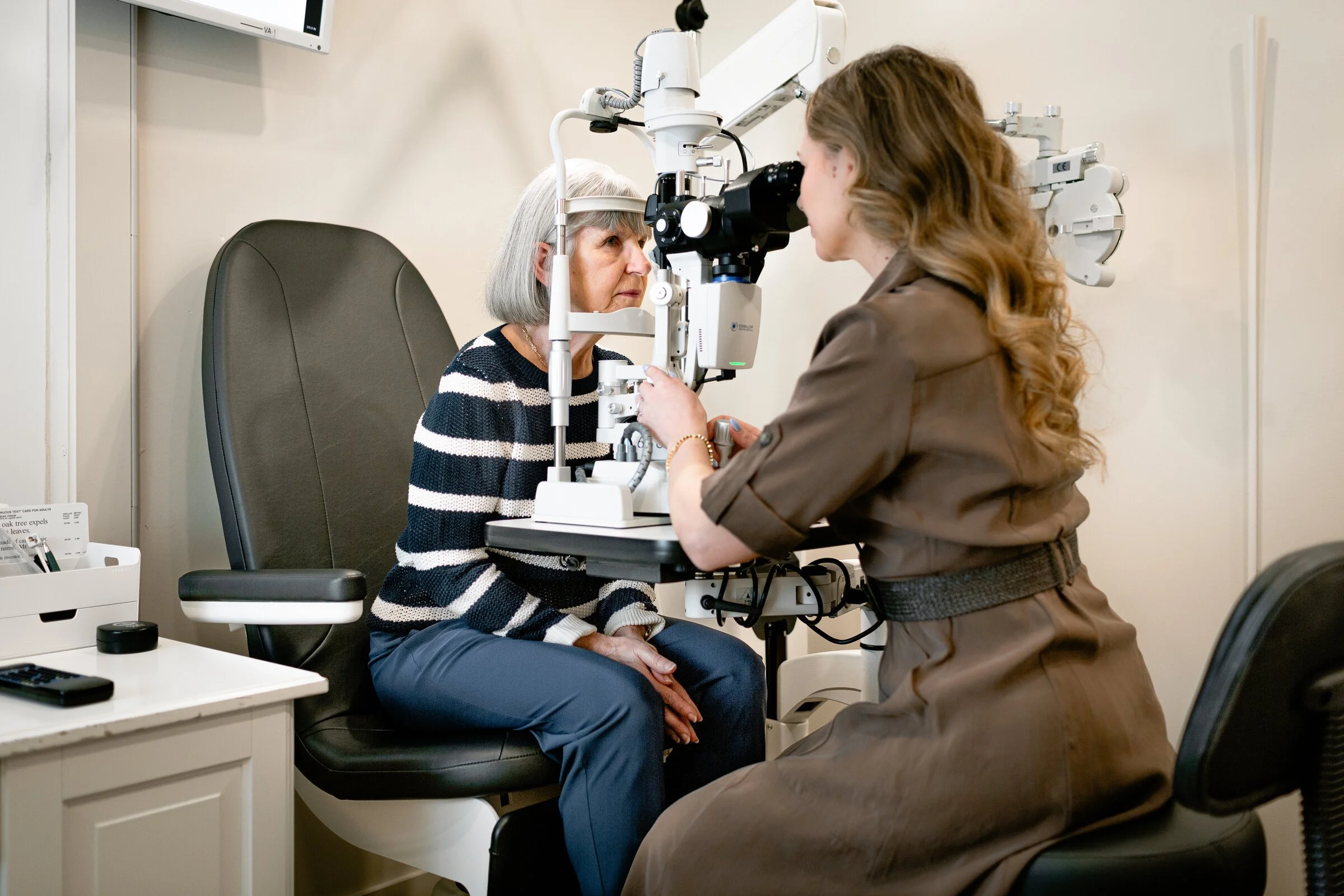
Using the microscope, Dr. Pozzer looks at your tear film, the edges of your eyelids and the front of your eye for signs of inflammation, blocked glands or buildup along the lashes.
Gland photography
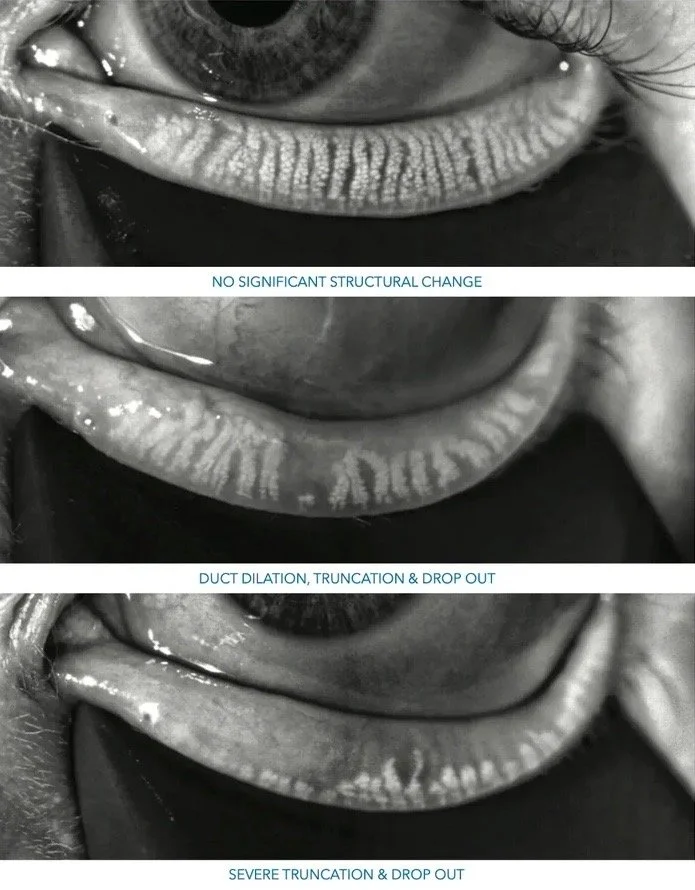
Infrared imaging photographs the oil glands inside your eyelids to see their structure, including any that have shrunk or dropped out.
Your plan
You leave with a treatment plan based on what she found, and we book a time to see how it's going.
Why gland photography matters
Your eyelids hold rows of small glands that add a thin layer of oil to your tears, which slows how fast they evaporate. When these glands get blocked or start to shrink, tears dry out faster and your eyes can feel gritty, tired or even watery.
Gland photography uses infrared light to show these glands in detail, including ones that have shrunk or dropped out, which you can’t see by looking at the eyelid alone. It’s one part of the picture, and Dr. Pozzer puts it together with the rest of your assessment to work out what’s behind your symptoms.
Not sure whether an assessment is right for you? Get in touch.
Your treatment plan
Heat
A heated eye mask softens thickened oil so it can flow out of the glands more easily. We'll show you how to use it and how often.
Lid hygiene
Lid wipes and sprays clear the buildup along your lashes and lid edges that can block glands and irritate your eyes.
The right drops
Drops vary a lot. Based on what your assessment shows, we'll point you to the type that suits your eyes, which might be a lipid-based drop for the day or a thicker gel at night.
Follow-up
We check back in to see how your eyes are responding and adjust your plan if they need something different.
Dry Eye FAQ
-
No, a dry assessment is not covered by OHIP.
-
No. You can book a dry eye assessment with Dr. Pozzer directly.
-
Yes. Contact lenses can play a part in dry eye, so bring your lens box or prescription with you.
-
Yes, Dr. Pozzer goes through imaging findings in detail with all of her patients.
-
We’re at 241 Wilson Street East in the village of Ancaster, about 15 minutes from Dundas and west Hamilton. There’s free parking beside and behind the boutique.