
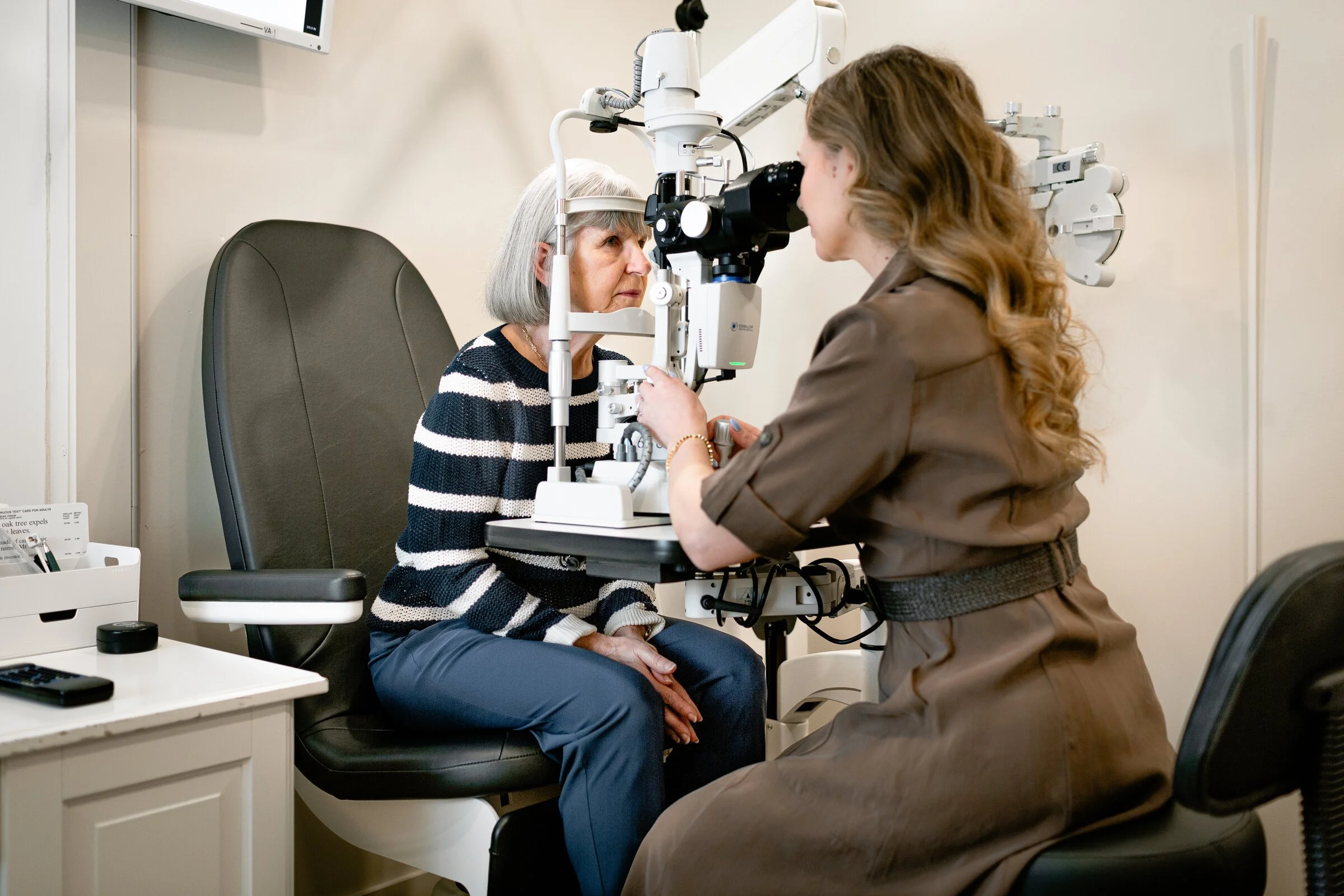
Diabetic Eye Exams in Ancaster
Covered by OHIP every 12 months
Diabetes can change the blood vessels at the back of your eye long before your vision changes. A yearly exam with Dr. Kristyn Pozzer, with OCT imaging and retinal photos, finds those changes early.
How diabetes can affect your eyes
Most of these develop without pain or any early change in vision, which is why a yearly exam matters even when your eyes feel fine.
Diabetic retinopathy
The small blood vessels in the retina weaken and can leak or bleed. Early on it usually has no symptoms.
Diabetic macular edema
Fluid builds up in the macula, the part of the retina you use for reading and fine detail, and your central vision blurs.
Cataracts
People with diabetes tend to develop cataracts at a younger age, and they gradually cloud and dull your vision.
Glaucoma
Diabetes raises the risk of glaucoma, which damages the optic nerve and slowly narrows your side vision.
What happens at a diabetic eye exam
Your health history
We ask how long you've had diabetes, how your blood sugar has been and what medications you take. Bring your latest A1C result if you have it.
Vision and eye pressure
We check your vision and prescription and measure the pressure inside your eyes.
A detailed look at your retina
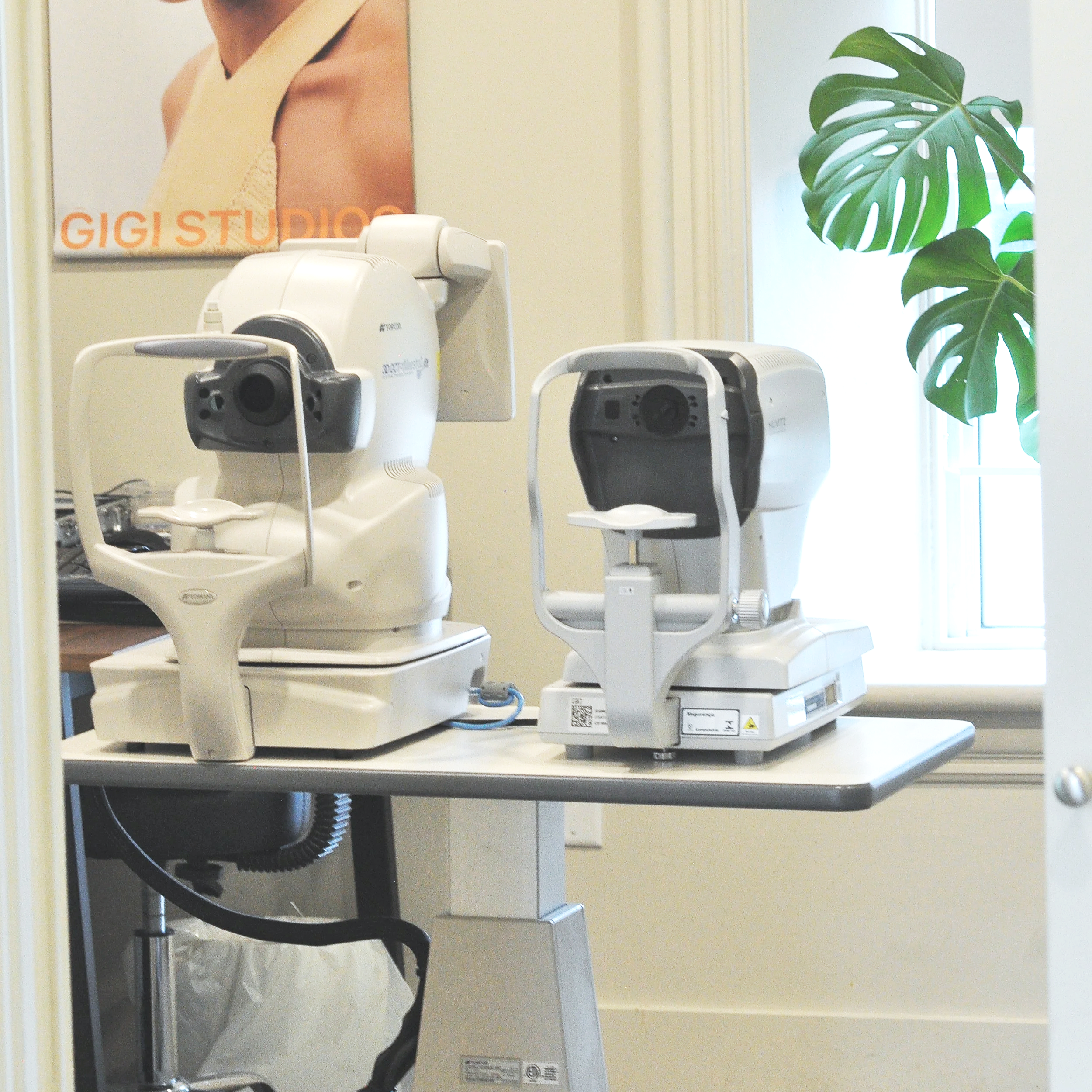
Dr. Pozzer examines the back of your eyes and takes an OCT scan and retinal photos, which show swelling, leaks and small bleeds in fine detail.
Your results
She goes over your images with you in detail. If anything needs treatment, she'll arrange a referral to an eye specialist and explain what happens next.
Why a yearly exam matters when your vision seems fine
Diabetic retinopathy usually doesn’t hurt or affect your vision until it’s more advanced. By the time someone notices blurring or dark spots, there can already be damage that can’t be fully reversed. This is why regular monitoring matters.
Found early, many of these changes can be treated before they affect your sight. Keeping your blood sugar and blood pressure in your target range helps too, and the images from each visit give Dr. Pozzer a baseline to compare against each year.
Not sure whether you’re due for an exam? Get in touch.
When to call us sooner
Sudden floaters or flashes
A shower of new floaters or flashes of light can be a sign of bleeding or a problem with the retina.
Blurry or wavy vision
Straight lines that look bent, or blurring that doesn't clear, can mean swelling in the macula.
Sudden onset double vision
Unexpected experience of seeing two overlapping or side-by-side images of a single object
Vision that keeps changing
Big swings in blood sugar can temporarily change your prescription. Talk to us before you buy new glasses.
If you suddenly lose vision in either eye, call us right away, or go to the nearest emergency department if we're closed.
Diabetic Eye Exam FAQ
-
In Ontario, OHIP covers a full eye exam every 12 months for people with diabetes at any age, plus any follow-up visits you need. OHIP doesn’t cover retinal imaging, so ask us about the fee for your OCT scan and retinal photos. Please bring your health card to your appointment.
-
Diabetes Canada recommends a retinal exam every year with type 1 diabetes, and every one to two years with type 2 when no retinopathy has been found. Dr. Pozzer may want to see you more often if she finds changes.
-
With type 2 diabetes, book an exam soon after you’re diagnosed so Dr. Pozzer has a starting point to compare against. With type 1, screening usually starts five years after diagnosis for anyone 15 or older, but you’re welcome to come in sooner.
-
No. You can book online or call us at 289-346-9773.
-
She may use drops to widen your pupils so she can see more of your retina. Your vision can stay blurry and sensitive to light for a few hours afterward, so bring sunglasses and consider having someone drive you home.
-
With your permission, we can send a summary of your exam to your family doctor or diabetes care team so everyone looking after you has the same picture.
-
We’re at 241 Wilson Street East in the village of Ancaster, about 15 minutes from Dundas and west Hamilton. There’s free parking beside and behind the boutique.